Learning Never Stops
- Sarah Hodgson
- Jul 27, 2015
- 3 min read


Summer vacation is coming to an end.
After a tough school year, I had envisaged a summer of lazy days, trashy novels, cocktails, and magazines. As in – I had expected to give my brain a break.
I tried, maybe too hard, to relax and chill out. But I got bored. Quickly.
A friend had recommended a couple of educational books, so I decided to give them a try.
Hooked immediately! Unreal.
By the time I’d finished my Master’s in May (four years of hard slog while working full time!), I did not ENJOY reading. Maybe because I HAD to read for that. It wasn’t a choice.
Now, suddenly, I am ‘free’ of study obligations and I WANT to study!!
So I started with this one. It spoke to my soul. I hope to dedicate a blog post just to this book soon, that will hopefully include a sketchnote, so I won’t write much about it now. Just to say that I think any educator who is serious about improving teaching and learning in their classroom should read it. I am pretty sure this will be my ‘Bible’ for the coming academic year. Which incidentally will be my 22nd year of teaching (yikes!). Yes, 22 years and I’m still learning. And I still love that I don’t know everything.
I am intending to consult this text like a reference book throughout the year as so many new ideas flowed in my mind while reading it! I really liked the sentence Ron Ritchhart used to encapsulate what quality education should look like:
“…What emerges is a rich portrait of the student as an engaged and active thinker able to communicate, innovate, collaborate, and problem-solve.”
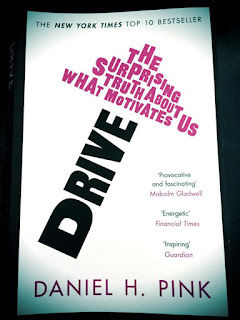
The next book I headed for was this one. While not really classed as an ‘educational’ text, I found some great insights into human motivation that can be transferred to the classroom. Here is the book’s own ‘cocktail party summary’, but where it states “business” I read “education”:
“When it comes to motivation, there’s a gap between what science knows and what business does. Our current business operating system – which is built around external, carrot-and-stick motivators – doesn’t work and often does harm. We need an upgrade. And the science shows the way. This new approach has three essential elements: (1) Autonomy – the desire to direct our own lives; (2) Mastery – the urge to get better and better at something that matters; (3) Purpose – the yearning to do what we do in the service of something larger than ourselves.
Definitely something to strive for in the classroom – enabling autonomy, creating opportunities for mastery, and engaging students in relevant learning tasks.

The third book that I have picked up this summer is this one that I have just started. With all three of these books, I have used them as I would a study text – highlighting sentences, phrases and sections that seem important to me. I know when I refer back to them it will be easier to find the parts that interested me most that way. I’ve not read much of this book yet, but my first highlighted sentence happened on the very first page of chapter one:
Some of us have to think more carefully about the language we use to offer our students the best learning environment we can.
Interestingly, both this book and ‘Creating Cultures of Thinking’ mentioned above contain the very same Vygotsky quote:
“Children grow into the intellectual life of those around them.”
Looking forward to having my thinking extended and learning more about the words we use in the classroom.
Once I have finished ‘Choice Words’ there are a few more educational reads that have been sitting on my bookshelf for way too long. Now I can’t wait to get to them!
What’s the most inspiring book about teaching and learning that you have read? Please leave title recommendations and a quick reason why as a comment below! Thanks in advance.


Comments